Self-care for depression & low mood
In this course, you'll learn about depression, what causes it and the way Lungy is designed to help.

What is depression?
We all sometimes feel down, fed up, or sad. This range of emotions and moods is natural - our lives are full of ups and downs, which impact how we feel. Feeling down is part of how we process and make sense of things that have happened to us, like day-to-day challenges such as having an argument, or a bad day at work. Over time, our minds can change our perspective and help us recover, adapt and move forward.
It is important to recognise the difference between feeling down or sad, and depression. Usually, you feel down for an identifiable reason - something has happened to make you feel sad. The symptoms will usually get better fairly quickly on their own, so within a few weeks you will feel back to normal and you can still go about your daily life.
Depression is a mental health condition which is associated with feeling sad, hopeless or losing interest in things we once enjoyed for 2 weeks or more. It is very common - around 1-in-5 of us will experience the condition at some point throughout our lives. Many of us don't realise the surprising ways our minds, and in particular, our bodies, respond to low mood and depression. Learning more can help us know if we or someone we care about needs help or support. We'll find out much more in this module…
What are the symptoms of low mood and depression?
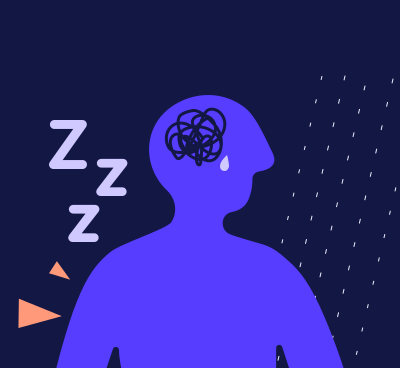
All of us are unique, and our experiences of low mood and depression can be very different too. We may have different symptoms that vary in their intensity, how long they last, and how much they affect our lives. In fact, it's possible to only have physical symptoms, only mental symptoms, or a combination of both.
Most of us are aware of the mental symptoms associated with depression, like feeling hopeless, consistently down or sad. However, over time, low mood and depression can change the way we think about ourselves and the world around us too. For example, we may have low self-esteem and find it harder to see any positives or hope for the future. We may also grapple with unhelpful thoughts, like replaying and fixating on things that didn't go well in the past, which can make us feel guilty or as though we have let ourselves or others down.
Low mood can affect the way our brains work in other unexpected ways, for example, we might notice ourselves struggling to concentrate in school or work. Some of us may find our thinking feels slower than normal, or find making decisions difficult or impossible. It's also possible to experience more subtle changes, like not being able to follow and understand something we are reading or what we are watching on TV.
Depression can also make life feel dull. Things that we used to look forward to and enjoy doing, like our hobbies, might feel like too much effort, or less fun than usual. Even small things, like foods or films we enjoy, might seem less enjoyable than usual.
Depression can also affect our bodies. Our sleep patterns may change – some of us may struggle to get to sleep, while others may sleep much more than usual. We may eat more or less than usual, which can cause weight gain or loss. Additionally, feeling depressed can manifest as feeling lethargic, or as physical aches and pains in our muscles, joints or back. Another sign is speaking or moving in a noticeably slow way, or the opposite - feeling restless and fidgeting.
Sometimes, in severe depression people can have thoughts of harming themselves, or that things would be better if they were not around. If you ever feel like this, urgently contact someone you know who can help, or your local emergency services. It's important to recognise there is always support to help you get better.

What causes depression?
Despite lots of research, we do not fully understand what causes depression. Depression seems to be the result of an interaction between our stress response, chemicals in our bodies called hormones, and the chemical messengers and physical connections in our brains, as well as our past life experiences. Whilst we do not fully understand the brain, or depression, but we can still explore what contributes to it and ways in which to feel better.
Depression is very common and we shouldn't feel ashamed or guilty about it. Lots of things in our lives can contribute to depression - we can control some of them, but many of them are out of our control, such as our genes, how we were raised, and the challenges we've experienced throughout our lives. Usually many different things contribute to us developing depression - it's unlikely to be the result of one event or experience in our lives, and we are not at fault. Taking a step back and thinking about what may be contributing to our feelings can help us understand ourselves a bit better and help us make positive changes.
It's important to think about our general mental and physical health too. The burden of experiencing and managing other mental health problems, such as anxiety, or another physical health condition, can contribute to depression. There are also lots of things that many of us do regularly, without knowing the impact they can have on our mental health. While drinking alcohol may make us feel better temporarily, it is technically a 'depressant' and can make us feel worse, especially over time. Using alcohol or drugs to cope with our feelings can be particularly harmful, especially if it delays us seeing a medical professional and getting the support we need.
Many of the lifestyle habits that are important for our general health, like sleeping well, being active and eating a healthy diet, can help us break out of the depression cycle and manage how we are feeling. We will explore how to incorporate some simple, healthy changes into your day next.
How can I improve my mood?
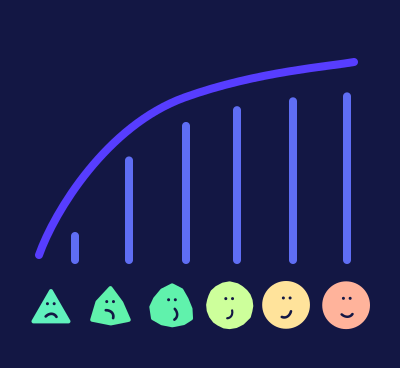
None of us want to experience feeling down for longer than we have to, but sometimes even making small changes can feel like a huge mountain to climb. Getting started is always the hardest bit and over time our motivation grows and it becomes easier for us to build and maintain healthy habits. The takeaway from this is we shouldn't simply wait to feel better - if possible, we should start by making small and achievable changes now.
Making changes can feel tough, particularly if we are feeling low or depressed. That's why we need to celebrate good days, when we have made progress, and prepare for bad days. We are unlikely to enjoy changes like being more active or eating more healthy foods right away, but with time and consistency little changes can have a positive effect on our mental health.
It's also totally normal to not meet our goals every day, in fact, having an 'all or nothing' mindset can hold us back - the most important thing is to try, and to know it's worth trying. If we haven't met our goal, being kind to ourselves and accepting that setbacks are a part of the process can help us do better tomorrow and stay consistent over the long-term. Over time, our motivation will grow and we may gradually start to feel a bit better, and more able to make bigger changes.
It can be difficult to make sense of the many different strategies to help with low mood and depression, so Lungy has made a list of some simple and effective strategies that are backed by research - let's explore some of them now!
Talk to someone you trust
When we are experiencing low mood or depression we can feel deeply alone and isolated. As a result, sharing how we are feeling is very important, as it can help us connect with ourselves and others. The simple act of being listened to can help us feel less alone, and if our listener is able, offering their unique perspective on what we are struggling with can help us work through it. This can be something simple, like talking to a friend or family member, or something more formal, like joining a support group, or speaking to a therapist.
Checking in with someone we trust can help strengthen our relationship and help us feel accepted and appreciated. When we share and verbalise our experience of low mood, it can also help us process some of our thoughts and feelings. We can start small - if meeting up with someone feels overwhelming, a text or call can help us connect too.
Another option is finding a local support group for low mood or depression. Here you can connect with other people who have a shared experience and understanding of how you are feeling. Alternatively, you could check out which charities offer support via phone in your area, which you may feel more comfortable with.
Speaking with a therapist trained in Cognitive Behavioural Therapy (CBT) can also be very helpful, if it is an option for you. CBT encourages us to identify, fully consider, and challenge unhelpful ways of thinking, such as worrying excessively about past failures. With work and time, CBT can help us reframe our thoughts in a more realistic, positive and problem-focused way. This can empower us to make positive changes in our lives, and equip us with skills for managing challenges we experience in the future.

Physical Exercise
Moving our bodies more can have powerful mood-boosting effects, by helping take our minds off feeling low, and interrupting unhelpful or negative thoughts. Being active also encourages our bodies to release more endorphins - chemicals which can create a sense of wellbeing and reduce pain.
Although a lot of us find being active difficult, there are some simple and effective strategies to incorporate more movement into our days. Finding ways of moving our bodies that are fun and sustainable is the best place to start. Lower intensity activities like stretching or making a daily step goal are both good options that are unlikely to lead to injuries.
You don't need any fancy equipment or to spend any money - walking is very underrated, and starting with a 10 minute walk outside each day, at a pace that feels good for you, can make a big difference. Combining movement with socialising, such as meeting up with a friend to walk and chat is another strategy to consider. Friends and family can help to keep us accountable, and stay consistent.
If you feel more comfortable exercising at home, using a fitness app, or finding an online video workout you enjoy may be helpful. Some of us may prefer a more structured approach - many gyms have free trials that are a low-commitment way to explore and find exercises and classes you enjoy.

Mindfulness
Many of us, particularly if we are feeling low or depressed, get caught up in our own thoughts. This can cause us to not absorb the rich sensations in our world, like the sound of people chatting in the street, the way our food tastes and feels in our mouths, and the rhythm of our bodies breathing in and out. Mindfulness is a state of purposeful heightened awareness of our thoughts, feelings and what we are sensing in the present moment - what we can see, hear, feel, smell and taste.
Some of us might find practicing mindfulness helpful for lifting our mood, as it can reconnect us with our bodies and all the things we usually don't notice. This change of focus encourages us to experience our thoughts in a more gentle and accepting way. Having moments of mindfulness can also allow us to feel more pleasure in our day-to-day lives, for example, we might enjoy our favourite meal more if we notice its different colours, textures and tastes.
Spending time in nature - feeling the sunlight on our skin and noticing the way fresh air feels as we move and breathe in and out, can help us feel peaceful and more in touch with the natural world. Another option we can try is to keep a journal or diary where we note down how our day has been - this can encourage us to think about how we are feeling, identify our emotions and what makes us feel better or worse. Over time, this approach can help us become more self-aware and mindful throughout our day, and, hopefully, feel a little better.

How can Lungy help?
Breathing exercises are another great way to create mindful moments, but they can be hard to learn and stick to - that's where Lungy comes in!
Lungy guides us through breathing exercises in a fun way, and was designed to lift our mood by encouraging us to connect with the present moment. Noticing the rhythm and flow of each deep and slow breath in, pause, and out, heightens our awareness of our bodies, surroundings and sensations.
Lungy engages our senses with peaceful sights and sounds that respond to each of our breaths. Realising the power of our breath to scatter nebula particles or act as the wind blowing dandelions can recouple us with the present, and help us feel more in control. This new focus, awareness and acceptance of the present, can help calm our minds, and encourage us to experience our thoughts and feelings openly and without judgement. Slowing down and connecting with the present also gives us an opportunity to process and reframe our thoughts and feelings without the noise of self-doubt and negativity.
Lungy was also designed to induce physical calm by activating our parasympathetic nervous, inducing a state of relaxation and recovery. Breathing exercises help us to fully fill and empty our lungs (something we don't usually do) through slow and deliberate pursed-lip breathing. This calms our bodies by slowing down our heart rate and our breathing. When our bodies feel calm, our minds closely follow, and this can help lift us if we are feeling down or depressed.
Lungy is designed to help us feel a little better, take control and engage with sensations we experience throughout the day, whether we are at home, work, or elsewhere. It's always there when you need it, and can be a tool to help you manage.
Ready to practice?
Download Lungy to put these techniques into practice with real-time breathing exercises guided by your own breath.