Boosting your sleep quality
In this course, you'll discover the basic science of sleep, why we need it, and some realistic tips to get a restful night's sleep.
What is sleep?
Sleep is a restorative and regenerative state. We lose consciousness and the way our bodies and minds function changes profoundly compared to when we are awake. Our eyes are closed, our breathing slows down and our bodies make only small movements. When we are sleeping, we are less attuned to our surroundings - it might take a loud noise or bright light to wake us up. Although sleep might appear peaceful on the surface, there are a lot of essential, health-promoting functions occurring in both our bodies and our brains.
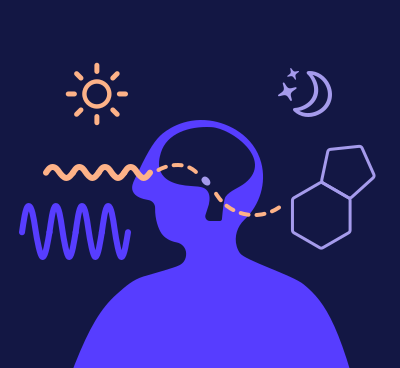
Our sleep pattern is largely controlled by a structure at the centre of our brain that's about the size of a grape, the hypothalamus. The hypothalamus is the body's control centre for many functions and is often called our 'biological clock'. Our hypothalamus receives messages from our eyes about whether it is light or dark. When it is dark, the hypothalamus sends a message to another part of our brain, which produces melatonin - a hormone that makes us feel sleepy. When it is light, our production of melatonin is switched off and we feel alert.
Although we may be much more aware of fatigue in our muscles throughout the day, our brains are hard at work and get fatigued too. Our brains are just 2% of our body weight but they are energy-hungry powerhouses and use about 20% of our daily calories. This high intensity brain activity produces many waste products, including a molecule called 'adenosine'. Adenosine gradually accumulates in our brains through the day, and builds pressure to sleep - levels peak at night and trigger feelings of drowsiness.
The way we sleep happens in structured, predictable cycles. When we first fall asleep at night, we slip into a very light sleep, and, as the night progresses our restful state deepens - our breathing and heart rate slow down, our muscles relax and our bodies get cooler. We cycle through light sleep, deep sleep, and rapid eye movement (REM) sleep in waves that are around 90 minutes in total. We get lots of deep sleep - the most restful kind of sleep - in the first few hours of the night, and this tapers off as morning arrives. During deep sleep our short-term memories are converted into long-term memories. On the other hand, the amount of REM sleep we get increases throughout the night. When people's brains are scanned during REM sleep, they are very active, and appear very similar to someone who is awake - this is because we experience vivid dreams during REM sleep, which is crucial for learning and creativity.
It is believed REM sleep and deep sleep work together - during REM sleep our brains make new connections, which are moulded into more logical memories and connections during deep sleep. As morning approaches, our bodies dial up the amount of cortisol, our main stress hormone. This helps us to enter lighter stages of sleep and make a smooth transition into a wakeful state.
As we all know, the transition isn't always smooth - we're all familiar with the dreaded groggy, nauseous feeling extra early wake-up times bring, and this feeling is totally natural. Waking up is stressful for our bodies - our blood pressure has to adjust when we stand rather than lie down and our bodies produce a spike of cortisol to help us become alert. Waking up during deep sleep or very abruptly is even more stressful - in fact it has its own name 'sleep inertia'. Sleep inertia happens when our brains struggle to adapt to the sudden shift from being asleep to being awake. The effects of sleep inertia on our bodies are powerful, it can feel like being drunk - our motor function is impaired, our reaction times slow down and we may experience brain fog.
So why do we need to know about sleep cycles? Understanding sleep cycles can help us get the most out of our sleep and avoid sleep inertia. Ideally, we could all have ample time to wake up naturally, when our body is ready to. However, most of us need to wake up at a specific time for work or school. Keeping a sleep diary and experimenting with different bed-times and wake times can help us work out how long our sleep cycles are, and ensure we wake up during the lighter stages of sleep. If your sleep cycles are 90 minutes, it may be helpful to set an alarm for 5 complete sleep cycles, or 7 hours and 30 minutes, rather than 7 or 8 full hours. This can help smooth the transition from being asleep to being awake, and help us feel more refreshed and ready for the day ahead.
Now we understand what sleep is, let's explore some of the incredible ways our bodies and brains restore and repair themselves when we're catching some zzzz's!

Why do we sleep?
Learning about what happens when we don't sleep can help us understand why it's so important. In 1964, an American teenager, Randy Gardner, stayed awake for 11 days for his school science project. During that time, Randy lost his sense of taste, smell, hearing, he had mood swings, issues with his memory, and became paranoid and started hallucinating. None of us will stay awake for 11 days at a time (hopefully!), but about half of teenagers and one quarter of adults in the UK and US do not get the recommended amount of sleep. In fact, some health scientists have said we are in an 'epidemic of sleep deprivation'.
Sleep is intimately tied to our physical, emotional and psychological health. During the day, we are confronted with a lot of information, and restful sleep is an opportunity for our brains to understand this information, and supports our memory - facts for work or school, and the development of more complex skills like learning to play the piano. Sleep also helps us to process challenging experiences we have had, and nurtures our emotional health and resilience throughout life's inevitable challenges.
Far from simply resting, our brains are busy cleaning up harmful waste products, like adenosine, when we are asleep, which prepares us to have a fresh start in the morning. If we don't get adequate quality sleep, our brains aren't able to clean up the waste at the rate it is produced. The health implications of sleep deprivation - specifically the accumulation of waste products in our brain is an emerging area of research, and is associated with many serious health conditions.
Sleep is also vital for the recovery and repair of our bodies. When we are sleeping, our hypothalamus sends messages to a tiny pouch in our brain, called the pituitary gland, to produce Growth Hormone. About 70% of the Growth Hormone our bodies need is released when we are sleeping. Growth Hormone does exactly what you'd expect - it helps our muscles and bones grow and repair. In fact, it is so powerful, it has been used illegally by athletes to enhance their athletic performance, so if you are looking for gains at the gym, a good night's sleep is an excellent (and legal) place to start!
Adequate sleep also supports a healthy immune system by helping our bodies' natural defence cells to do their job properly. These cells destroy outside intruders, like bacteria and viruses. They also detect and destroy threats from within, for example recognising abnormal cells in our bodies that may develop into cancer.
As anyone who has worked a night shift or has a newborn baby will know, sleep can profoundly impact our appetite too. Our bodies produce two very important hormones to manage our appetite - ghrelin (the greedy hormone) makes us feel hungry, and leptin, which comes from the greek word for thin, 'leptos', makes us feel full. Having the correct balance helps us eat what our bodies need, at the right time. Inadequate sleep can disrupt this balance, and increase ghrelin, which can leave us feeling very hungry and craving fatty foods, and, over time, lead to unwanted weight gain.
The amount of sleep we need to function optimally changes a lot throughout life, and varies based on our genes and lifestyle. Most adults need about 7-9 hours of sleep per night to function at their best. However, we all lead busy lives and there are limits to the amount of sleep we have time for. Something we can do is make some small changes to improve the quality of our sleep, and help us unwind and get to sleep quicker at the end of a busy day.
It's clear sleep is absolutely crucial for our health and wellbeing, so let's explore some simple, scientifically proven tips to help you fall asleep quicker and boost your sleep quality!
Consistent bedtime and wake-up time
Most of us will identify as being a 'night person', a 'morning person', or somewhere in between - this is called our 'chronotype' and it is determined by our genes. Our chronotype has a strong influence on when we feel most alert, when we feel sleepy, as well our preferred meal times and the time we feel most focussed.
Despite the natural variation in chronotype, most of us have to adhere to socially determined hours or work or school, which can lead to 'social jet lag'. Social jet lag is the discrepancy between when we go to sleep and when we wake up on weekdays versus the weekend - for example, waking at 7:00 am (because we have to) for work on weekdays, and sleeping until 11:00 am (because it feels good) on weekends. Unfortunately, social jet lag is associated with fatigue, mood disturbances and conditions including obesity.
While it's natural to have some fluctuations in our wake-up time and bedtime, focusing on keeping our sleep timing as consistent as possible can help us get better quality sleep, and feel at our best. This may be a gradual process, and a great first step is trying to align your weekend wake-up time with your weekday wake-up time.
It's easier to make healthy changes when we establish a routine. Although this may be challenging at first, over time it will become a habit that requires very little effort to maintain. Going to sleep at a consistent time can form part of a wider bedtime routine, that helps signal it is time to unwind and conditions our brains and bodies to expect sleep.
You wouldn't expect your body to complete an intense workout without warming up first, and sleep is no different. There are lots of strategies for creating a peaceful bedtime routine and priming our bodies for high-quality sleep - we'll discuss some easy and effective tips next!
Light & darkness for better sleep
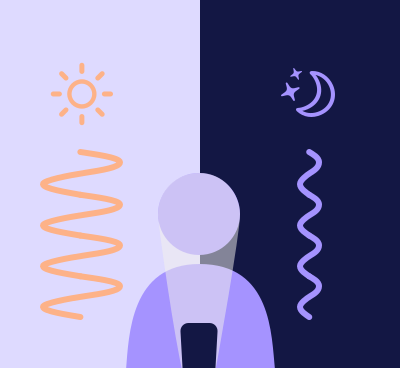
Managing our exposure to light and darkness can help us feel more alert during the day, and feel more sleepy at night. Getting some sunlight in the morning, even for just 10 minutes, can help us feel more alert. This could mean drinking a cup of coffee outside as part of our morning routine, or, even better, going for a walk. A small amount of sun on our skin, particularly during the darker months, has an added benefit - it helps our bodies manufacture vitamin D, which is essential for keeping our bones, teeth and muscles healthy. Another option is to eat lunch outside, or go for a short walk if you get a lunch break.
Ensuring our surroundings are dark at night time is also crucial - this tells our brains that it is time to rest, and strengthens signals to release the sleep hormone, melatonin. When it is dark outside, try to mirror this in your home by dimming the lights - this will prime your brain and body for sleep.
Another important source of light is our TVs, phones, tablets and laptops. The blue light devices emit tells our brains it is daytime, and dampens signals to release melatonin and promote sleepiness. Setting your device to 'Night Shift' in the evening can help limit your exposure to blue light by switching the screen to warmer colours.
Besides being a source of blue light, our devices themselves are designed to be stimulating and engaging, which can have a negative impact on sleep. For example, people who use social media for longer throughout the day experience more difficulties falling asleep, and reduced sleep quality. Some scientists think timing is very important - using social media in the 30 minutes before bed may be even more detrimental to our sleep compared to other times of day.
The good news is there are lots of ways to manage our relationship with our devices, so we can enjoy them, but still get the restful sleep we all need to thrive. If social media is having a negative impact on your sleep, and you don't feel in control of when you reach for your phone, using settings that lock you out of your social media during specified times may be beneficial.
Another source of distraction is notifications - messages from friends, emails and apps - which are designed to get our attention and draw us into our phone. This can make our attempts to limit screen time before bed unnecessarily difficult. Adjusting your phone's settings and switching to a regular 'do not disturb' schedule, for example ending all notifications between 8pm and 8am, may help you stay off your phone and unwind before sleeping.
If the last thing you look at before going to sleep is a device, putting your device away 10 minutes before bed and reading, drawing, journaling or even better - doing breathing exercises - can help you switch into sleep mode and relax. Over time, making sure your bed is a device free zone can support restful sleep. If you use your phone as an alarm clock, consider investing in an old-fashioned one - that way you can sleep soundly with your phone, and its various distractions, safely in another room.

Get moving for better sleep
We all know physical activity is great for our health, and here's another reason to get moving - it's great for your sleep too! Research shows that regular physical activity can improve both sleep quality and sleep duration, and the effect works the other way - high-quality sleep can help increase your physical activity too.
Moving our bodies helps us sleep for a few reasons. Firstly, it produces melatonin, the sleepy hormone that helps us fall asleep and stay asleep at night. Movement also encourages our bodies to produce serotonin, a chemical that is released in our brains and boosts our mood. Importantly, serotonin is the chemical used to manufacture melatonin, so increasing serotonin helps our bodies produce more of the sleepy hormone. Being active is also a powerful way to reduce stress, which is one of the main contributors to sleeping difficulties. Moving our bodies can create a positive feedback loop - it boosts our mood, which encourages us to be more active, and results in even more benefits for our sleep.
Reduce your caffeine intake
Being mindful of our choices of drinks in the afternoon and evening can help us get to sleep easier. Many of the drinks we enjoy and rely upon can make it very hard to get to sleep at night. One of the culprits is caffeine which most of us know is found in coffee and tea, but it's also found in high concentrations in energy drinks and fizzy drinks.
Caffeine is a central nervous system stimulant, and many of us love the burst of energy and alertness it gives us. Caffeine keeps us awake by blocking the receptors in our brain for adenosine, the waste product that accumulates throughout the day and helps us feel sleepy at night. This means our brain is less aware of the high levels of adenosine, and we feel less sleepy. However, consuming caffeine can feel like a rollercoaster for our bodies and minds. While we feel alert temporarily, eventually we process the caffeine and our brains are suddenly aware of the adenosine that has been accumulating, which can feel like a wave of exhaustion hitting our bodies. This crash in energy levels may result in us reaching for more caffeine later in the day to help us stay alert.
Although sensitivity varies from person to person, caffeine can stay in our system for a very long time - up to 8 hours. Caffeine can also cause 'nocturia', getting up to pee in the night, which can make it hard for us to get enough quality sleep.
If you have been having trouble getting to sleep or staying asleep, check drink labels to see how much caffeine they contain - you might be surprised. A good first step is imposing a time cut-off for caffeinated drinks. If you usually have your last cup of tea or coffee at 5pm, try 4pm and so on. Over time, you can gradually move your cut-off earlier and earlier, and reduce the number and strength of caffeinated drinks you are having. Ideally, your 'caffeine cut-off' should be 8 hours before your bed-time, to allow your body to fully process and clear out the caffeine.
Replacing caffeinated coffee and tea with tasty non-caffeinated alternatives, like fruit or herbal teas, can help replicate the experience you enjoy, without the negative impact on your sleep. Replacing energy drinks or fizzy drinks later in the day with sparkling water can help reduce feelings of restlessness at night, and has the added benefit of reducing our intake of sugar and artificial sweeteners.
Reduce alcohol before bed
Although many people find drinking alcohol helps them feel drowsy and get to sleep easier, this effect is misleading as alcohol damages our sleep quality. Alcohol is a sedative, and can lead to us falling into a deep sleep more quickly. The accelerated transition from being awake into deep sleep disrupts the normal cycling through sleep stages. Drinking alcohol skews the delicate balance and synergy between deep sleep (too much) and REM sleep (too little), leading to a decline in sleep quality.
Even a small amount of alcohol can have a big impact on our sleep quality - less than 2 drinks for men and less than 1 drink for women reduces sleep quality by about 10%. The effect is dose-dependent - the more we drink, the more our sleep quality suffers - drinking more than 2 drinks for men and more than 1 drink for women reduced sleep quality by an alarming amount, about 40%. This disruption of sleep quality can lead to a self-perpetuating cycle of drinking, poor sleep, and drinking to get to sleep.
Fortunately, there are some small steps we can take to limit the impact of drinking on our sleep. Gradually reducing the strength and number of drinks we have, eating nutritious meals, and drinking more water alongside alcoholic drinks can help. Many bars and restaurants carry non-alcoholic beer and wine, which can help you socialise without feeling like you are missing out. Many of us socialise and drink at night, but being aware of the time you are drinking can help. If you are able, try to stop drinking as early as possible at night, ideally 4 hours before you go to sleep, to help mitigate the impact of alcohol on your sleep. Our culture and many social gatherings are centred around consuming alcohol, and it can be incredibly challenging to cut back or quit. Making healthy changes is easier if you team up with a friend or a partner who is making similar changes - like being more mindful of how much and when they drink alcohol.
Reduce smoking & vaping
Smoking and vaping delivers a rapid hit of nicotine to our bodies and brains, producing feelings of pleasure and alertness. Nicotine enters our bloodstream and attaches to specific nicotine receptors in our brain within seconds. Here, our brain releases a powerful pleasure and reward hormone, called dopamine - the same hormone our bodies release if we are eating a delicious meal or listening to our favourite music. This is one of the reasons cutting back or quitting can be so challenging, and is one of the reasons nicotine has harmful effects on our sleep.
Nicotine also travels to the small organs that sit on top of our kidneys - our adrenal glands, and triggers the release of adrenaline. Adrenaline boosts alertness, but also has negative consequences - like increasing our heart rate, breathing rate, and blood pressure. Adrenaline puts our body on high alert, and is part of our powerful 'fight-or-flight' response, which involves hyper-vigilance to potential threats. This explains why smoking and vaping can make it incredibly challenging to switch off and get to sleep.
Although reducing smoking and vaping, or ideally quitting are the best options, there are a few strategies that can help alleviate the negative impact of nicotine on sleep. A helpful first step may be avoiding smoking or vaping for 4 hours before bed, this will reduce the amount of nicotine and other stimulating chemicals in your bloodstream that damage your sleep quality.
If you miss the feeling of vaping, there are low and no nicotine e-liquids you can use in the evening, but make sure you are careful which brands you buy, as many vape liquids are poorly regulated and contain more nicotine than the label says. If you are a smoker, replacing evening cigarettes with nicotine gum or patches can help you reduce your dose of nicotine gradually. Cutting back and stopping smoking or vaping in the evening is likely to be difficult at first, but will become easier with time.
Identifying your triggers can also help. Work stress, relationship problems and money problems are all common triggers for smoking and vaping. Thinking about your triggers and trying to replace smoking or vaping with a healthier coping strategy may facilitate reduced nicotine consumption, and better sleep.
How can Lungy help?
Lungy guides you through soothing, interactive deep breathing exercises that are designed to help you relax and unwind as part of your bedtime routine. We'll explore some of the science here!
Human bodies and minds have been shaped over about 200,000 years - that's a long time, and it means we are trying to operate in a rapidly changing modern environment equipped with ancient bodies and minds. Given this asymmetry, it makes sense that we struggle with lots of health-promoting things like staying active, eating a nutritious diet, and getting to sleep. But the good news is understanding our ancient physiology can empower us to make healthy changes and get to sleep easier!
In the past there were more dangers in our environment, and thus reasons we might need to be on high alert at night - to avoid predation or protect young. Scientists who study evolution believe having a difficult time getting to sleep or staying asleep is our bodies' adaptive response to a perceived or real threat. In other words, in the past, struggling to get to sleep when we felt threatened helped us keep ourselves and our loved ones safe.
Our ancient nervous system, called our autonomic nervous system, is responsible. It has 2 modes: 'fight or flight' where we are on high alert and focused on survival, and 'rest and digest' which makes us feel relaxed and safe, and our bodies focus on growth and repair. When 'fight or flight' mode is activated in response to a real or perceived threat, a cascade of changes happens in our bodies - we feel alert and focused, our hearts beat quicker and our breathing speeds up too.
Our ancient nervous system cannot distinguish between real and perceived threats. While in the past we may have been justifiably concerned about a prowling predator under the cover of darkness, our bodies often respond in the same way to modern worries, like an upcoming exam, work presentation, or relationship problems.
Thankfully, deep breathing is an incredible way to harness the power of our ancient nervous system, and override feelings of stress and restlessness before bed. Lungy breathing exercises guide us through fully filling and emptying our lungs (something we don't usually do) through slow and deliberate pursed-lip breathing. This stimulates a very important nerve, the vagus nerve, which sends messages from our lungs to our brain that activate 'rest and digest' mode. This calms our bodies by slowing down our heart rate and our breathing. When our bodies feel calm, our minds closely follow, and this can help prime us for sleep.
We all know how hard it is to change our behaviour, and establishing a positive sleep routine is no different. That's why Lungy was designed to be fun, relaxing and easy to incorporate into your bedtime routine. It lets you set reminders every evening to help you stay consistent and signal it's time to start winding down. The range of peaceful, interactive and abstract visuals designed for sleep can help you slow down after a busy day, and focus on what you are seeing and feeling in the moment. This heightened awareness of the present moment, can help reset the feelings of stress we may have carried forward from our day.
Lungy was designed to help you unwind after a busy day, and help your body and mind settle in for a restful night's sleep - we hope you love it as much as we do!
Ready to practice?
Download Lungy to put these techniques into practice with real-time breathing exercises guided by your own breath.